Academia.eduAcademia.edu

Outline

3D printing for soft robotics - a review

2018, Science and technology of advanced materials

https://doi.org/10.1080/14686996.2018.1431862

Abstract

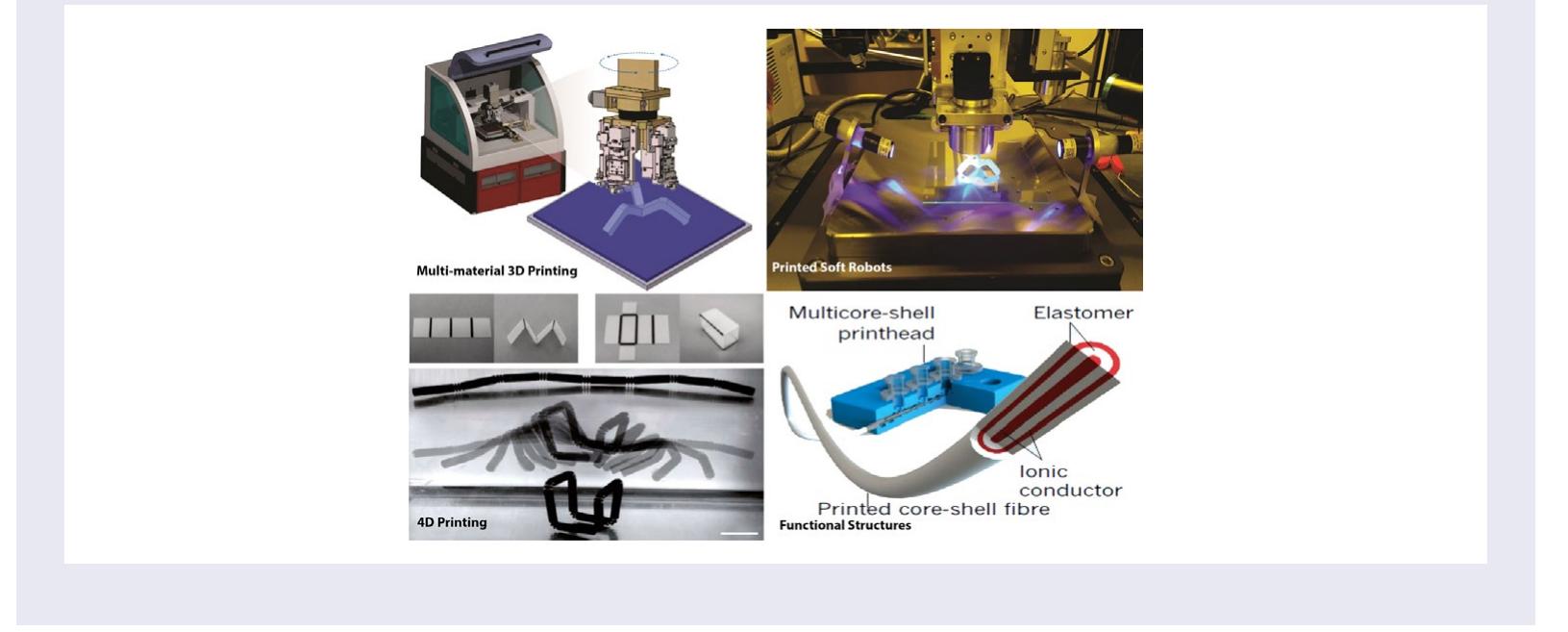
Soft robots have received an increasing attention due to their advantages of high flexibility and safety for human operators but the fabrication is a challenge. Recently, 3D printing has been used as a key technology to fabricate soft robots because of high quality and printing multiple materials at the same time. Functional soft materials are particularly well suited for soft robotics due to a wide range of stimulants and sensitive demonstration of large deformations, high motion complexities and varied multi-functionalities. This review comprises a detailed survey of 3D printing in soft robotics. The development of key 3D printing technologies and new materials along with composites for soft robotic applications is investigated. A brief summary of 3D-printed soft devices suitable for medical to industrial applications is also included. The growing research on both 3D printing and soft robotics needs a summary of the major reported studies and the authors believe that this review a...

Key takeaways
sparkles

AI

  1. 3D printing revolutionizes soft robotics by enabling complex geometries and multi-material integration.
  2. The review highlights advancements in 3D printing technologies applicable to soft robot fabrication.
  3. Soft robots utilize materials like hydrogels and elastomers for flexibility and adaptability in design.
  4. Recent developments include soft robotic gloves aiding rehabilitation, showcasing practical applications in medicine.
  5. 3D printing fosters innovation in soft robotics, addressing challenges with smart materials and bio-integration.

References (120)

  1. Duda T, Raghavan LV. 3D metal printing technology. IFAC-PapersOnLine 2016;49:103-110. DOI:10.1016/ j.ifacol.2016.11.111.
  2. Bikas H, Stavropoulos P, Chryssolouris G. Additive manufacturing methods and modeling approaches: a critical review. Int J Adv Manuf Technol. 2016;83:389- 405. DOI:10.1007/s00170-015-7576-2.
  3. Gul JZ, Yang B-S, Yang YJ, et al. In situ UV curable 3D printing of multi-material tri-legged soft bot with spider mimicked multi-step forward dynamic gait. Smart Mater Struct. 2016;25:115009. DOI:10.1088/0964-1726/25/11/115009.
  4. Ivanova O, Williams C, Campbell T. Rapid Prototyping Journal Additive manufacturing (AM) and nanotechnology: promises and challenges. Rapid Prototyp J. 2013;19:353-364. DOI:10.1108/RPJ-12- 2011-0127.
  5. Khorram Niaki M, Nonino F. Additive manufacturing management: a review and future research agenda. Int J Prod Res. 2016;7543:1-21. DOI:10.1080/00207543.2 016.1229064.
  6. Rosen DW. A review of synthesis methods for additive manufacturing. Virtual Phys Prototyp. 2016;1-13. DOI: 10.1080/17452759.2016.1240208.
  7. Snyder TJ, Andrews M, Weislogel M, et al. 3D systems' technology overview and new applications in manufacturing, engineering, science, and education, 3D print. Addit Manuf. 2014;1:169-176. DOI:10.1089/ 3dp.2014.1502.
  8. Vaezi M, Seitz H, Yang S. A review on 3D micro- additive manufacturing technologies. Int J Adv Manuf Technol. 2013;67:1721-1754. DOI:10.1007/s00170- 012-4605-2.
  9. Yadollahi A, Shamsaei N. Additive manufacturing of fatigue resistant materials: challenges and opportunities. Int J Fatigue. 2017;98:14-31. DOI:10.1016/ j.ijfatigue.2017.01.001.
  10. Chimene D, Lennox KK, Kaunas RR, et al. Advanced bioinks for 3D printing: a materials science perspective. Ann Biomed Eng. 2016;44:2090-2102. DOI:10.1007/ s10439-016-1638-y.
  11. Elahinia M, Shayesteh Moghaddam N, Taheri Andani M, et al. Fabrication of NiTi through additive manufacturing: a review. Prog Mater Sci. 2016;83:630- 663. DOI:10.1016/j.pmatsci.2016.08.001.
  12. Vaezi M, Chianrabutra S, Mellor B, et al. Multiple material additive manufacturing -part 1: a review. Virtual Phys Prototyp. 2013;8:19-50. DOI:10.1080/ 17452759.2013.778175.
  13. Choi J, Kwon OC, Jo W, et al. 4D printing technology: a review, 3d print. Addit Manuf. 2015;2:159-167. DOI: 10.1089/3dp.2015.0039.
  14. Khoo ZX, Teoh JEM, Liu Y, et al. 3D printing of smart materials: a review on recent progresses in 4D printing. Virtual Phys Prototyp. 2015;10:103-122. DOI:10.1080/17452759.2015.1097054.
  15. Zolfagharian A, Kouzani AZ, Khoo SY, et al. Evolution of 3D printed soft actuators. Sensors Actuators A Phys. 2016;250:258-272. DOI:10.1016/j.sna.2016.09.028.
  16. Elango N, Faudzi AAM. A review article: investigations on soft materials for soft robot manipulations. Int J Adv Manuf Technol. 2015;80(5-8):1027-1037. DOI: 10.1007/s00170-015-7085-3.
  17. Hines L, Petersen K, Lum GZ, et al. Soft actuators for small-scale robotics. Adv Mater. 2016:1603483. DOI: 10.1002/adma.201603483.
  18. Dordlofva C, Lindwall A, Törlind P. Opportunities and challenges for additive manufacturing in space applications. Proc Nord. 2016; Trondheim, Norway, 10th -12th August 2016;1:401-410. ISBN: 978-1- 904670-80-3.
  19. Goh GD, Agarwala S, Goh GL, et al. Additive manufacturing in unmanned aerial vehicles (UAVs): challenges and potential. Aerosp Sci Technol. 2016;63:140-151. DOI:10.1016/j.ast.2016.12.019.
  20. Gross BC, Erkal JL, Lockwood SY, et al. Evaluation of 3D printing and its potential impact on biotechnology and the chemical sciences. Anal Chem. 2014;86:3240- 3253. DOI:10.1021/ac403397r.
  21. Gul JZ, Yang YJ, Young Su K, et al. Omni directional multimaterial soft cylindrical actuator and its application as a steerable catheter. Soft Robot. 2017;4(3):224-240. soro.2016.0042. DOI:10.1089/ soro.2016.0042.
  22. Lifton VA, Lifton G, Simon S. Options for additive rapid prototyping methods (3D printing) in MEMS technology. Rapid Prototyp J. 2014;20:403-412. DOI: 10.1108/RPJ-04-2013-0038.
  23. Angrish A. A critical analysis of additive manufacturing technologies for aerospace applications. 2014 IEEE Aerosp Conf, Big Sky, MT, USA. 2014;2014:1-6. DOI: 10.1109/AERO.2014.6836456.
  24. Bhushan B, Caspers M. An overview of additive manufacturing (3D printing) for microfabrication. Microsyst Technol. 2017;23:1117-1124. DOI:10.1007/ s00542-017-3342-8.
  25. Boparai KS, Singh R, Singh H. Development of rapid tooling using fused deposition modeling: a review. Rapid Prototyp J. 2016;22:281-299. DOI:10.1108/RPJ- 04-2014-0048.
  26. Chen RK, Jin Y, Wensman J, et al. Additive manufacturing of custom orthoses and prostheses - a review. Addit Manuf. 2016;12:77-89. DOI:10.1016/ j.addma.2016.04.002.
  27. Yang S, Zhao YF. Additive manufacturing-enabled design theory and methodology: a critical review. Int J Adv Manuf Technol. 2015;80:327-342. DOI:10.1007/ s00170-015-6994-5.
  28. Engstrom DS, Porter B, Pacios M, et al. Additive nanomanufacturing -a review. J Mater Res. 2014;1- 25. DOI:10.1557/jmr.2014.159.
  29. Espalin D, Alberto Ramirez J, Medina F, et al. A review of melt extrusion additive manufacturing processes: I Process design and modeling. Rapid Prototyp J. 2014;20:192-204. DOI:10.1108/RPJ-01-2013-0012.
  30. Fera M, Fruggiero F, Lambiase A, et al. State of the art of additive manufacturing: review for tolerances, mechanical resistance and production costs. Cogent Eng. 2016;3:1261503. DOI:10.1080/23311916.2016.1 261503.
  31. Ford SLN. Additive manufacturing technology: potential implications for U.S. manufacturing competitiveness. J Int Commer Econ. 2014;6:1-35.
  32. Ford S, Despeisse M. Additive manufacturing and sustainability: an exploratory study of the advantages and challenges. J Clean Prod. 2016;137:1573-1587. DOI: 10.1016/j.jclepro.2016.04.150.
  33. Frketic J, Dickens T, Ramakrishnan S. Automated manufacturing and processing of fiber-reinforced polymer (FRP) composites: an additive review of contemporary and modern techniques for advanced materials manufacturing. Addit Manuf. 2017;14:69- 86. DOI:10.1016/j.addma.2017.01.003.
  34. Gong X, Anderson T, Chou K. Review on powder-based electron beam additive manufacturing technology. Manuf Rev. 2014;1:1-2. DOI:10.1051/mfreview/2014001.
  35. Guo N, Leu MC. Additive manufacturing: technology, applications and research needs. Front Mech Eng. 2013;8:215-243. DOI:10.1007/s11465-013-0248-8.
  36. Hedges M, Marin AB. 3D Aerosol Jet® Printing -adding electronics functionality to RP/RM. WHITEPAPER - optomec. 2012:14-15.
  37. Huang Y, Leu MC, Mazumder J, et al. Additive manufacturing: current state, future potential, gaps and needs, and recommendations. J Manuf Sci Eng. 2015;137:14001. DOI:10.1115/1.4028725.
  38. Onal CD, Rus D. Autonomous undulatory serpentine locomotion utilizing body dynamics of a fluidic soft robot. Bioinspir Biomim. 2013;8:26003. DOI: 10.1088/1748-3182/8/2/026003.
  39. Homberg BS, Katzschmann RK, Dogar MR, et al. Haptic identification of objects using a modular soft robotic gripper. Intell Robots Systems (IROS), 2015
  40. IEEE/RSJ Int Conf, Hamburg, Germany. 2015;1698- 1705.
  41. Umedachi T, Vikas V, Trimmer BA. Softworms: the design and control of non-pneumatic, 3D-printed, deformable robots. Bioinspir Biomim. 2016;11:25001. DOI: 10.1088/1748-3190/11/2/025001.
  42. Truby RL, Lewis JA. Printing soft matter in three dimensions. Nature 2016;540:371-378. DOI:10.1038/ nature21003.
  43. Chan V, Park K, Collens MB, et al. Development of miniaturized walking biological machines. Sci Rep. 2012;2:857. DOI:10.1038/srep00857.
  44. Chan V, Jeong JH, Bajaj P, et al. Multi-material bio- fabrication of hydrogel cantilevers and actuators with stereolithography. Lab Chip. 2012;12:88-98. DOI: 10.1039/C1LC20688E.
  45. Peele BN, Wallin TJ, Zhao H, et al. 3D printing antagonistic systems of artificial muscle using projection stereolithography. Bioinspir Biomim. 2015;10:55003. DOI:10.1088/1748-3190/10/5/055003.
  46. MacCurdy R, Katzschmann R, Kim Y, et al. Printable hydraulics: a method for fabricating robots by 3D co- printing solids and liquids. arXiv Prepr. arXiv1512.03744. 2015. Available from: http://arxiv.org/abs/1512.03744.
  47. Gul JZ, Yang B-S, Yang YJ, et al. In situ UV curable 3D printing of multi-material tri-legged soft bot with spider mimicked multi-step forward dynamic gait. Smart Mater Struct. 2016;25:115009. DOI: 10.1088/0964-1726/25/11/115009.
  48. Lin H-T, Leisk GG, Trimmer B. GoQBot: a caterpillar- inspired soft-bodied rolling robot. Bioinspir Biomim. 2011;6:26007. DOI:10.1088/1748-3182/6/2/026007.
  49. Rost A, Schadle S. The SLS-generated soft robotic hand -an integrated approach using additive manufacturing and reinforcement learning. 2013 12th Int Conf Mach Learn Appl, Miami Beach, Miami, FL, USA. IEEE 2013:215-220. DOI:10.1109/ICMLA.2013.44.
  50. Roppenecker DB, Pfaff A, Coy JA, et al. Multi arm snake-like robot kinematics. 2013 IEEE/RSJ Int Conf Intell Robot Syst, Tokyo, Japan. IEEE 2013;2013:5040- 5045. DOI:10.1109/IROS.2013.6697085.
  51. Guo SZ, Heuzey M, Therriault D. Solvent -cast direct - write microfabrication of thermoplastic-based nanocomposite structures. 19TH Int Conf Compos Mater, Montreal, Quebec, Canada. 2013:1-9.
  52. Lewis JA. Direct ink writing of 3D functional materials. Adv Funct Mater. 2006;16:2193-2204. DOI: 10.1002/adfm.200600434.
  53. Robinson SS, O'Brien KW, Zhao H, et al. Integrated soft sensors and elastomeric actuators for tactile machines with kinesthetic sense. Extrem Mech Lett. 2015;5:47-53. DOI:10.1016/j.eml.2015.09.005.
  54. Xu X, Cheng W, Dudek D, et al. Material modeling for shape deposition manufacturing of biomimetic components. Am Soc Mech Eng. 2000;DETC2000/D:1-10.
  55. Bailey SA, Cham JG, Cutkosky MR, et al. Biomimetic robotic mechanisms via shape deposition manufacturing. Robot Res 9th Int Symp. 1999:403-410.
  56. He Y, Wu Y, Fu JZ, et al. Developments of 3D printing microfluidics and applications in chemistry and biology: a review. Electroanalysis 2016;28:1658-1678. DOI:10.1002/elan.201600043.
  57. Liu W, Li Y, Liu J, et al. Application and performance of 3D printing in nanobiomaterials. J Nanomater. 2013;2013:1-7. DOI:10.1155/2013/681050.
  58. Patra S, Young V. A review of 3D printing techniques and the future in biofabrication of bioprinted tissue. Cell Biochem Biophys. 2016;74:93-98. DOI:10.1007/ s12013-016-0730-0.
  59. Tack P, Victor J, Gemmel P, et al. 3D-printing techniques in a medical setting: a systematic literature review. Biomed Eng Online. 2016;15:115. DOI:10.1186/s12938-016-0236-4.
  60. Martinez RV, Glavan AC, Keplinger C, et al. Soft actuators and robots that are resistant to mechanical damage. Adv Funct Mater. 2014;24:3003-3010. DOI: 10.1002/adfm.201303676.
  61. Tolley MT, Shepherd RF, Mosadegh B, et al. Untethered soft robot. Soft Robot. 2014;1:213-223. DOI: 10.1089/soro.2014.0008.
  62. Hong S, Sycks D, ai Chan HF, et al. 3D printing: 3D printing of highly stretchable and tough hydrogels into complex, cellularized structures. Adv Mater. 2015;27:4034. DOI:10.1002/adma.201570182.
  63. Culha U, Hughes J, Rosendo A, et al. Soft robotics: trends, applications and challenges. 2017. DOI: 10.1007/978-3-319-46460-2.
  64. Zhao H, O'Brien K, Li S, et al. Optoelectronically innervated soft prosthetic hand via stretchable optical waveguides. Sci Robot. 2016;1:eaai7529. DOI: 10.1126/scirobotics.aai7529.
  65. Wehner M, Truby RL, Fitzgerald DJ, et al. An integrated design and fabrication strategy for entirely soft, autonomous robots. Nature 2016;536:451-455. DOI: 10.1038/nature19100.
  66. Mosadegh B, Polygerinos P, Keplinger C, et al. Pneumatic networks for soft robotics that actuate rapidly. Adv Funct Mater. 2014;24:2163-2170. DOI: 10.1002/adfm.201303288.
  67. Martinez RV, Branch JL, Fish CR, et al. Robotic tentacles with three-dimensional mobility based on flexible elastomers. Adv Mater. 2013;25:205-212. DOI: 10.1002/adma.201203002.
  68. Song YS, Sun Y, Van Den Brand R, et al. Soft robot for gait rehabilitation of spinalized rodents. IEEE Int Conf Intell Robot Syst, Tokyo, Japan. 2013:971-976. DOI: 10.1109/IROS.2013.6696468.
  69. Umedachi T, Trimmer BA. Design of a 3D-printed soft robot with posture and steering control. 2014 IEEE Int Conf Robot Autom, Hong Kong, China. IEEE 2014:2874-2879. DOI:10.1109/ICRA.2014.6907272.
  70. Kim J, Alspach A, Yamane K. 3D printed soft skin for safe human-robot interaction. IEEE Int Conf Intell Robot Syst, Hamburg, Germany. 2015 Dec:2419-2425. DOI: 10.1109/IROS.2015.7353705.
  71. Bartlett NW, Tolley MT, Overvelde JTB, et al. A 3D-printed, functionally graded soft robot powered by combustion. Science (80-.). 2015;349:161-165. DOI: 10.1126/science.aab0129.
  72. Katzschmann RK, Marchese AD, Rus D. Hydraulic autonomous soft robotic fish for 3D swimming. In Chatila R, Hirzinger G, editors. Berlin, Heidelberg: Springer Berlin Heidelberg; 2016. p. 405-420. DOI: 10.1007/978-3-319-23778-7_27.
  73. Marchese AD, Katzschmann RK, Rus D. A recipe for soft fluidic elastomer robots. Soft Robot. 2015;2:7-25. DOI: 10.1089/soro.2014.0022.
  74. Robinson SS, O'Brien KW, Zhao H, et al. Integrated soft sensors and elastomeric actuators for tactile machines with kinesthetic sense. Extrem Mech Lett. 2015;5:47-53. DOI:10.1016/j.eml.2015.09.005.
  75. Ahn S-H, Lee K-T, Kim H-J, et al. Smart soft composite: an integrated 3D soft morphing structure using bend-twist coupling of anisotropic materials. Int J Precis Eng Manuf. 2012;13:631-634. DOI: 10.1007/s12541-012-0081-8.
  76. Cheng N, Ishigami G, Hawthorne S, et al. Design and analysis of a soft mobile robot composed of multiple thermally activated joints driven by a single actuator. 2010 IEEE Int Conf Robot Autom, Anchorage, AK, USA. IEEE 2010:5207-5212. DOI: 10.1109/ROBOT.2010.5509247.
  77. Polygerinos P, Wang Z, Galloway KC, et al. Soft robotic glove for combined assistance and at-home rehabilitation. Rob Auton Syst. 2015;73:135-143. DOI: 10.1016/j.robot.2014.08.014.
  78. Maeder-York P, Clites T, Boggs E, et al. Biologically inspired soft robot for thumb rehabilitation. J Med Device. 2014;8:20934. DOI:10.1115/1.4027031.
  79. Menguc Y, Park Y-L, Pei H, et al. Wearable soft sensing suit for human gait measurement. Int J Rob Res. 2014;33:1748-1764. DOI:10.1177/0278364914543793.
  80. Zhang Y, Kim WS. Highly sensitive flexible printed accelerometer system for monitoring vital signs. Soft Robot. 2014;1:132-135. DOI:10.1089/ soro.2014.0003.
  81. Connolly F, Walsh CJ, Bertoldi K. Automatic design of fiber-reinforced soft actuators for trajectory matching. Proc Natl Acad Sci. 2016:201615140. DOI: 10.1073/pnas.1615140114.
  82. Mutlu R, Alici G, in het Panhuis M, et al. 3D printed flexure hinges for soft monolithic prosthetic fingers. Soft Robot. 2016;3:120-133. DOI:10.1089/ soro.2016.0026.
  83. Muth JT, Vogt DM, Truby RL, et al. Embedded 3D printing of strain sensors within highly stretchable elastomers. Adv Mater. 2014:1-6. DOI:10.1002/ adma.201400334.
  84. Frutiger A, Muth JT, Vogt DM, et al. Capacitive soft strain sensors via multicore-shell fiber printing. Adv Mater. 2015;27:2440-2446. DOI:10.1002/ adma.201500072.
  85. Someya T, Kato Y, Sekitani T, et al. Conformable, flexible, large-area networks of pressure and thermal sensors with organic transistor active matrixes. Proc Natl Acad Sci USA. 2005;102:12321-12325. DOI: 10.1073/pnas.0502392102.
  86. Cho kJ, Koh JS, Kim S, et al. Review of manufacturing processes for soft biomimetic robots. Int J Precis Eng Manuf. 2009;10:171-181. DOI:10.1007/s12541-009- 0064-6.
  87. Ahn SH, Lee KT, Kim HJ, et al. Smart soft composite: an integrated 3D soft morphing structure using bend- twist coupling of anisotropic materials. Int J Precis Eng Manuf. 2012;13:631-634. DOI:10.1007/s12541- 012-0081-8.
  88. Lind JU, Busbee TA, Valentine AD, et al. Instrumented cardiac microphysiological devices via multimaterial three-dimensional printing. Nat Mater.2017;16:303-308. DOI:10.1038/nmat4782.
  89. Cham JG, Bailey SA, Clark JE, et al. Fast and robust: hexapedal robots via shape deposition manufacturing. Int J Rob Res. 2002;21:869-882. DOI: 10.1177/0278364902021010837.
  90. Dollar AM, Howe RD. Design and evaluation of a robust compliant grasper using shape deposition manufacturing. Dyn Syst Control Parts A B. ASME 2005:1403-1410. DOI:10.1115/IMECE2005-79791.
  91. Gafford J, Ding Y, Harris A, et al. Shape deposition manufacturing of a soft, atraumatic, and deployable surgical grasper. J Mech Robot. 2015;7:21006. DOI: 10.1115/1.4029493.
  92. Morrow J, Hemleben S, Menguc Y. Directly fabricating soft robotic actuators with an open-source 3-D printer. IEEE Robot Autom Lett. 2017;2:277-281. DOI:10.1109/LRA.2016.2598601.
  93. Carrico JD, Traeden NW, Aureli M, et al. Fused filament 3D printing of ionic polymer-metal composites (IPMCs). Smart Mater Struct. 2015;24:125021. DOI: 10.1088/0964-1726/24/12/125021.
  94. Onal CD, Rus D. A modular approach to soft robots. Proc IEEE RAS EMBS Int Conf Biomed Robot Biomechatronics, Rome, Italy. 2012:1038-1045. DOI: 10.1109/BioRob.2012.6290290.
  95. Mutlu R, Yildiz SK, Alici G, et al. Mechanical stiffness augmentation of a 3D printed soft prosthetic finger. 2016 IEEE Int Conf Adv Intell Mechatronics, Banff, Alberta, Canada. 2016:7-12. DOI:10.1109/AIM.2016.7576735.
  96. Yap HK, Ng HY, Yeow C-H. High-force soft printable pneumatics for soft robotic applications. Soft Robot. 2016;3:144-158. DOI:10.1089/soro.2016.0030.
  97. Rossiter J, Walters P, Stoimenov B. Printing 3D dielectric elastomer actuators for soft robotics. Proc Spie. 2009;7287:1-10. DOI:10.1117/12.815746.
  98. Cai J. 4D printing dielectric elastomer actuator based soft robots; 2016.
  99. Zarek M, Layani M, Cooperstein I, et al. 3D printing of shape memory polymers for flexible electronic devices. Adv Mater. 2016;28:4449-4454. DOI:10.1002/ adma.201503132.
  100. Yang Y, Chen Y, Wei Y, et al. 3D printing of shape memory polymer for functional part fabrication. Int J Adv Manuf Technol. 2016;84:2079-2095. DOI: 10.1007/s00170-015-7843-2.
  101. Zolfagharian A, Kouzani AZ, Khoo SY, et al. 3D printed hydrogel soft actuators. 2016 IEEE Reg 10 Conf, Marina Bay Sands, Singapore. IEEE. 2016;2016:2272- 2277. DOI:10.1109/TENCON.2016.7848433.
  102. Ozbolat IT, Hospodiuk M. Current advances and future perspectives in extrusion-based bioprinting. Biomaterials 2016;76:321-343. DOI: 10.1016/j.biomaterials.2015.10.076.
  103. Yuk H, Lin S, Ma C, et al. Hydraulic hydrogel actuators and robots optically and sonically camouflaged in water. Nat Commun. 2017;8:14230. DOI:10.1038/ncomms14230.
  104. Paik JK, Wood RJ. A bidirectional shape memory alloy folding actuator. Smart Mater Struct. 2012;21:65013. DOI:10.1088/0964-1726/21/6/065013.
  105. Umedachi T, Vikas V, Trimmer BA. Highly deformable 3-D printed soft robot generating inching and crawling locomotions with variable friction legs. IEEE Int Conf Intell Robot Syst, Tokyo, Japan. 2013:4590-4595. DOI: 10.1109/IROS.2013.6697016.
  106. Rus D, Tolley MT. Design, fabrication and control of soft robots. Nature 2015;521:467-475. DOI: 10.1038/nature14543.
  107. Schumacher CM, Loepfe M, Fuhrer R, et al. 3D printed lost-wax casted soft silicone monoblocks enable heart- inspired pumping by internal combustion. RSC Adv. 2014;4:16039. DOI:10.1039/C4RA01497A.
  108. Chan V, Jeong JH, Bajaj P, et al. Multi-material bio- fabrication of hydrogel cantilevers and actuators with stereolithography. Lab Chip. 2012;12:88-98. DOI:10.1039/c1lc20688e.
  109. Roche ET, Horvath MA, Wamala I, et al. Soft robotic sleeve supports heart function. Sci Transl Med. 2017:1-12.
  110. Raman R, Cvetkovic C, Bashir R. A modular approach to the design, fabrication, and characterization of muscle-powered biological machines. Nat Protoc. 2017;12:519-533. DOI:10.1038/nprot.2016.185.
  111. Petruska AJ, Nelson BJ. Soft micro-robots for military medicine. HDIAC J. 2017:25-27.
  112. Nelson BJ, Kaliakatsos IK, Abbott JJ. Microrobots for minimally invasive medicine. Annu Rev Biomed Eng. 2010;12:55-85. DOI:10.1146/annurev-bioeng- 010510-103409.
  113. Sliker LJ, Kern MD, Schoen JA, et al. Surgical evaluation of a novel tethered robotic capsule endoscope using micro-patterned treads. Surg Endosc Other Interv Tech. 2012;26:2862-2869. DOI:10.1007/s00464-012- 2271-y.
  114. Roche ET, Wohlfarth R, Overvelde JTB, et al. A bioinspired soft actuated material. Adv Mater. 2014;26:1200-1206. DOI:10.1002/adma.201304018.
  115. Lewis JA. Direct ink writing of 3D functional materials. Adv Funct Mater. 2006;16:2193-2204. DOI: 10.1002/adfm.200600434.
  116. Hockaday LA, Kang KH, Colangelo NW, et al. Rapid 3D printing of anatomically accurate and mechanically heterogeneous aortic valve hydrogel scaffolds. Biofabrication 2012;4:35005. DOI:10.1088/1758- 5082/4/3/035005.
  117. Wei Y, Chen Y, Ren T, et al. Variable stiffness robotic gripper based on integrated soft actuating and particle jamming. Soft Robot. 2016;3:134-143. DOI: 10.1089/soro.2016.0027.
  118. Bogue R. Flexible and soft robotic grippers: the key to new markets? Ind Robot An Int J. 2016;43(3):258-263.
  119. Rost A, Schädle S. The SLS-generated soft robotic hand -an integrated approach using additive manufacturing and reinforcement learning. Proc 2013 12th Int Conf Mach Learn Appl ICMLA 2013, Miami, FL, USA. 2013;1:215-220. DOI:10.1109/ICMLA.2013.44.
  120. Morrison RJ, Hollister SJ, Niedner MF, et al. Mitigation of tracheobronchomalacia with 3D-printed personalized medical devices in pediatric patients. Sci Transl Med. 2015;7:285ra64. DOI:10.1126/scitranslmed.3010825.

FAQs

sparkles

AI

What recent advancements have improved 3D printing for soft robots?add

The integration of techniques like UltiCast and photolithography has enabled quick and reliable soft robot fabrication. For example, Lewis' research on omnidirectional printing of liquid materials has advanced complexity in soft robotic design.

How do 3D-printed soft actuators compare in performance to traditional ones?add

3D-printed actuators exhibit an average error of about 5% in performance compared to molded actuators, as observed by Morrow et al. This similarity in functionality highlights the feasibility of 3D printing for soft robotics.

What materials have been recently identified as promising for soft robotics?add

Material classes such as dielectric elastomers, shape memory polymers, and hydrogels have shown potential for soft robotics applications. For instance, hydrogels have demonstrated hydraulic actuation capabilities ideal for soft robots.

What are the main benefits of using 3D printing in soft robotics?add

3D printing enables complex geometries with tailored material properties and reduces waste, offering design flexibility. The ability to integrate various materials within a single print enhances operational functionalities in soft robotics.

How are 3D-printed biological robots revolutionizing medical applications?add

In vivo applications like soft robotic sleeves have been shown to improve cardiac output in test subjects, indicating potential for future medical interventions. This demonstrates the ability of 3D-printed soft robots to interface effectively with biological systems.

About the author
Wilbur Wright College, Graduate Student

Doctor | Fiction Writer | ActivistAs seen in: @medium @5pillarsnews @themuslimvibe @bbcasiannetwork.

Papers
151
Followers
3
View all papers from Imran Shaharrow_forward